
Buying bulk food may seem confusing, and it may not seem worth it since you are spending more money upfront. Perhaps you tried it and ended up with a 25-lb. bag of unused brown lentils sitting in your pantry for years that you eventually threw out (for the record, we recently discovered that we love brown lentils, they are an excellent replacement for regular beans – like pinto – and do not require pre-soaking!).
While dry foods are most commonly bought in bulk, there are many other kinds of food you can buy in bulk (especially for up to 12 months, in our experience). We will share our favorite foods to buy in bulk below.
Keep in mind that choosing dry foods rather than their processed counterparts (dried beans vs. canned beans) will be the cheapest option. You will have to change your mindset a little if you do not already make most of your food from scratch – in fact, if that is you, I suggest only buying a few key “emergency” types of food in bulk from the dry foods lists.
Considering the issues with our food supply chain, it is a good idea to stock up on foods that can last a while. You can buy in bulk what you need for 1, 3, 6, or even 12 months using the method outlined here.
We absolutely recommend a reliable, trustworthy, and healthy bulk food source like Azure Standard. We have also bought from club stores for up to 1-3 months’ worth of products (before we switched to Azure Standard). Azure Standard also has a lot of household and homesteading supplies! More about our first Azure Standard experience is below.
Bulk Food Shopping Tips
- only buy bulk foods you already eat regularly, other than an emergency bag of dried beans and/or rice (even if you do not already eat those).
- if you are able to buy fresh fruits and vegetables in bulk as well, then be prepared and plan to immediately preserve them for long-term storage (canning, drying, freezing, cold room storage, etc.).
- create a weekly or monthly menu – BASED ON WHAT YOU ALREADY MAKE MOST OFTEN.
- now is not the time to go way out of your comfort zone (smaller quantities of new-to-you foods may be a good way to try something new – choose 1, 2, 3, or 5-pound sizes for those items).
- simplify your menu plan by cycling through your family’s 7 favorite meals for breakfast, lunch, dinner, and snacks with little variation*.
- estimate your monthly need for each food.
- now you know what you will eat daily, weekly, monthly, and potentially yearly.
Food Storage Option: Harvest Right Freeze Dryer
Bulk Wheat & Bean Option: Palouse Brand
Best Grain Mill & Kitchen Mixer: NutriMill/Bosch
Click >> Azure Standard << For Bulk Shopping
*if you get bored with the simple meal plan, you can mix things up by making a different meal with essentially the same ingredients. For example, if using ground beef and potatoes as one meal each week, usually as meatballs and oven-roasted potatoes, then you can switch it to taco-baked potatoes or shepherd’s pie quite easily with a few modifications. However, you will know you need ground beef and potatoes every week. You can keep the protein and vegetable source the same, but then make a few different types of meals with each set of protein and vegetables, then throw in a type of grain such as rice or bread. Read: how to simplify meal planning
I have found that planning a very simple menu plan that is 7 revolving meals, buying those ingredients in bulk, and then actually using both the plan and the food helps my entire family stay healthier, reduces our food budget (and, allows for some splurges on some “convenience foods” now and then), and creates a family atmosphere I desire – food seems to bring my family together … food made and shared at home seems to do so even more!
Reasons to Buy Bulk Food
- save money. check the price per ounce to compare.
- be prepared. having enough food to feed your family for several days (or months) without needing a grocery store in case of an emergency.
- higher quality. Azure Standard only sells non-GMO or organic foods that are locally raised or sourced from fair-trade, sustainable practices.
- calm in the chaos.
- have peace of mind with a better routine/plan in place for meals.
It is as simple as that. However, it does take some number crunching as you add up quantities when you first get started, and that can be a headache if numbers aren’t your thing – just keep the end goal in mind: you are saving money over daily/weekly shopping (or, even monthly, if you choose to buy more than a month’s worth at once), time/energy in the future (you will only have to “shop” your pantry, freezer, etc.), and preparing for your family’s welfare (being able to feed them is important, and it’s even better if it is healthy foods).
It also takes discipline. You do not want to buy all of the bulk food and then give up on sticking to your menu plan to actually cook/eat it (with the flexibility described above) and then end up ordering take-out most of the time – that is not saving you any money at all!
You will be spending more money upfront, but buying in bulk is usually more affordable in the long run. If you receive a tax refund each year, that is the perfect time to place a big bulk foods order – or start saving a little each month to build up savings to then use to stock up in bulk sizes. Another option is to buy bulk foods just every 3 months, which is not quite as cost-effective long-term (especially if ordering from Azure Standard) but may be easier to plan and manage upfront.
Another thing to consider is where and how you will store your bulk foods. Five-gallon containers with lids, one-gallon jars, and even quart/pint jars are great, depending on what you are stocking up with – or, have a dry, secure area for the bags of food to be kept away from moisture and rodents/insects. Jars/cans of food are easier to store, but you will still need the space away from extreme temperature changes.

Some Foods to Buy in Bulk
DRY (shelf-stable):
rice
beans/lentils (pinto and brown lentils are our choice)
wheat berries (if you have a way to grind them yourself when you need flour – these last a long time if kept dry).
nuts
oats (whole groats, rolled, etc.)
spices (cinnamon, cloves, ginger, allspice, nutmeg, etc.)
seasonings (salt, pepper, garlic, turmeric, cumin, etc.)
herbs (parsley, oregano, basil, etc.)
baking goods (cocoa powder, baking soda, baking powder or ingredients to make your own, almond flour, ground wheat flour if you can not grind your own wheat berries – this will be best stored in a freezer for longer life)
edible seeds (chia, sunflower, etc.)

glass jars of tomato product (paste, crushed, juice, sauce, etc.)
oils (olive, coconut, avocado, etc.)
shortening (palm)
sweeteners (erythritol, stevia, molasses, maple syrup, honey, etc.)
apple cider vinegar
canned products (coconut milk, tuna, chicken, etc.)
condiments you use often (mustard, hot sauce, coconut aminos, etc.)
FREEZER:
a half or whole beef (we outsource this to a local farmer)
frozen vegetables and fruit can often be bought in bulk from local farms at a discount (we do this with blueberries), but Azure Standard has fresh, frozen, and canned produce in bulk quantities.
Homemaking Resources
Homemaker’s Friend Daily Planner is my top recommendation for a physical/hard copy planner!
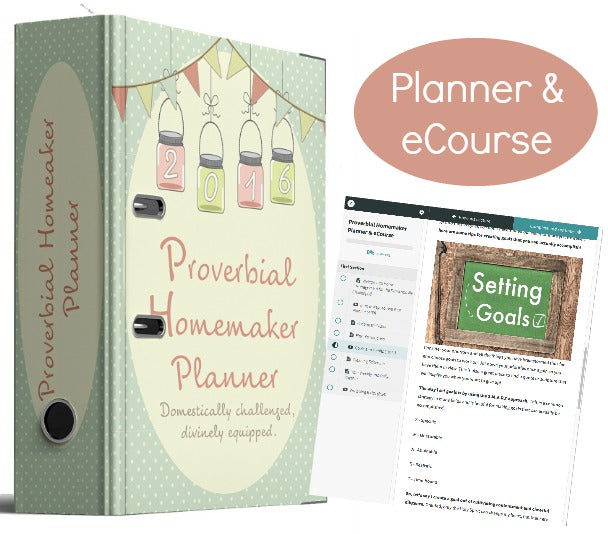
Proverbial Homemaker Planner & eCourse – digital Resources I recommend!
On a personal note: we will ideally have our farm-raised meat (including meat we have canned ourselves to be shelf-stable), fresh fruit, and vegetables (preserved from the harvest to last until the next) from our farm (or, from locally sourced farms). We are not fully able to supply an entire year’s worth of these foods for our family, yet, so we buy some to supplement our farm.
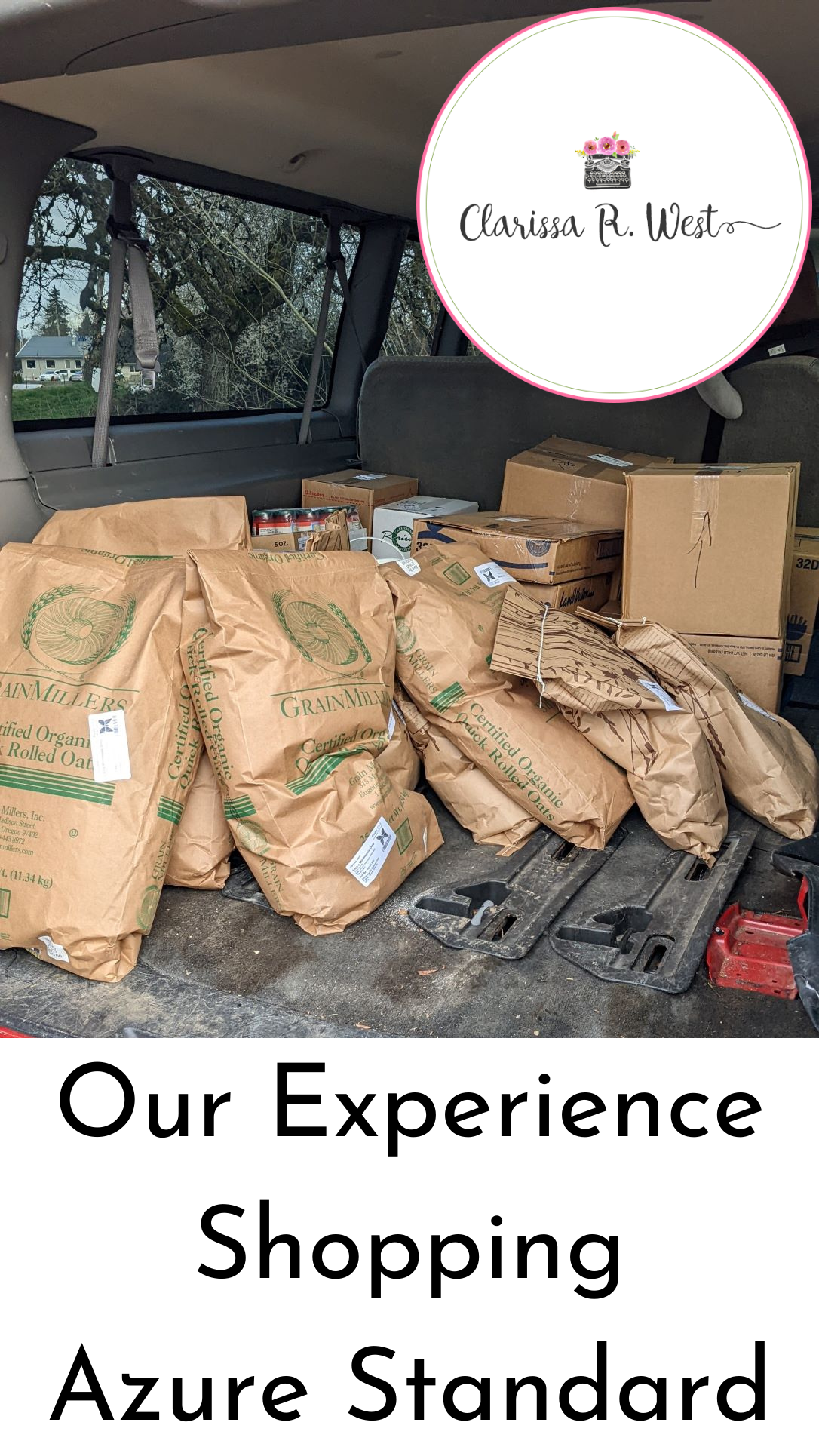
Our Azure Standard Experience
You may be thinking about joining Azure Standard, but you would love an inside look from a “real person” before deciding to place an order. I was the same and ended up just taking the plunge without knowing a lot of details upfront.
I wanted to share our experience so that you know a little more about the process. However, every drop has its coordinator, and things may vary slightly.
When you shop on Azure Standard, you can choose parcel delivery or a drop point. Parcel delivery has a shipping fee and is delivered directly to your house, but the drop point is free (or has a small fee, depending on your location), and you must meet the truck to pick up your order.
Speaking of drops, you may be wondering what that means. A drop is a place to pick up your order locally. They are usually free to join, your order ships free (via the truck assigned to your drop), and it arrives on a predetermined date.
If you choose to join a local drop, you will know when the order cut-off date is and what day to be at the drop. You will not know the exact time (although it usually shows 6:00 am to start with) until the day/evening before your “drop”.
You will either receive an email or a text with the updated time to arrive at your drop location. Ours was confirmed as 9:00 am on a Wednesday, and the truck arrived within minutes after us.
While you can place the order weeks in advance, your order is not finalized until the cut-off date/time, and your payment is not applied until the order is packed on the truck. You will then receive an email with the final order, which will highlight any items that were out of stock and were not loaded on the truck (and you were not charged for).
Until the cut-off day/time, you can edit your order. Items are not officially reserved for you, so they can go out of stock and require you to find a substitute for your final order.

The final email will also include the number of cases (pieces) your order will be, the cubic feet, and the total weight. This helps you arrive prepared with enough room to haul your groceries and household goods.
The truck unloads a pallet, and each case/piece is labeled for the customer it belongs to, but they are mixed and need to be sorted. It started out seeming kind of chaotic as people started sorting and calling out the names on the labels, but everything went fast and ended up being quite efficient and organized.
You take what belongs to you and start loading it into your vehicle. Don’t be surprised if others step in to help you or if you are asked to help another person (my husband helped a pregnant woman).
It was a very friendly and helpful community, but no social expectations or small talk were happening. Everyone was there to get their orders and leave (and let the truck leave) as quickly as possible to get back to regular routines, work, etc.
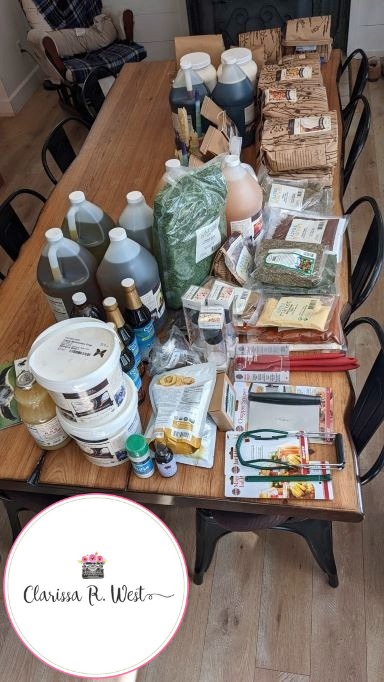
Our items came in 43 cases/pieces. Some of those were 25lb. bags, boxes that smaller items had been packed into, and some boxes of single items that we had ordered in bulk (canned coconut milk, etc.).
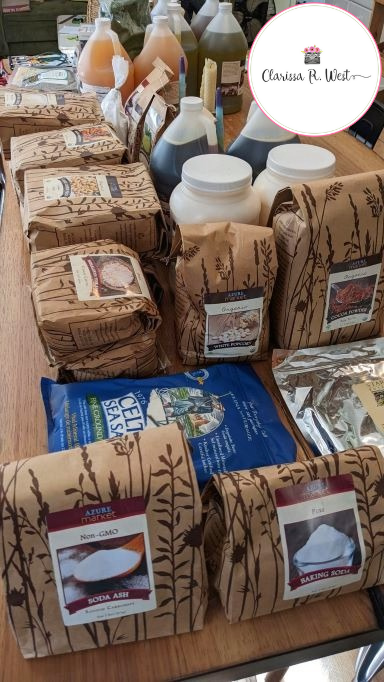
Overall, it was a good experience and especially worth it for (approximately) 12 months’ worth of food. We do not plan to order Azure monthly or even more than a couple of times each year, but you definitely could make it a monthly routine and order everything from them.
They have a huge selection of food, household items, and homesteading supplies. They also carry a lot of specialty/allergy-friendly food that is not easily found at local grocery stores.
Another reason you may want to order from them monthly is that they are a great company to support. They have a huge farm that produces a lot of the products, but they also source products that are fair-trade, sustainable, and non-GMO (or even organic). You can read more about them HERE.
You Might Also Like …

I’ve ordered from Azure for years, usually several times a year, and absolutely love it. I’m so glad you had a good experience!
I’m glad I finally “dared” to try them out.
I love Azure! They’re not the cheapest on everything (some things are cheaper at my local Natural Grocers) so you have to know your prices. Or can be inconvenient when the drop day & time aren’t what they usually are and don’t work with your schedule, but knowing others that pick up at your drop is helpful (they may be available when you’re not). Overall it’s a great company and most of their prices are competitive. They have fantastic prices on raw milk cheddar if you buy 10lbs at a time (we go through about 5lbs/mo and the blocks easily keep for 2+ months).
We chose to only do dry foods this time. I am thinking about adding in fresh/frozen food if we order again before next year. And yes, definitely price check. Some things are worth paying a little more for quality and availability, though. We’ve had local shortages with limited quantities so can not stock up.
Wow, this is really interesting, it puts my weekly shopping list (cobbled together ten minutes before) to shame.